In the News
Stories and trends changing the healthcare landscape

Mental Health Parity
Mental Health Parity – the journey ahead
Mental Health is a vital component of overall well-being, yet not everyone has equal access to the care and support they need. Mental Health Parity encompasses the principle that all individuals deserve access to high quality, affordable mental health services. Achieving parity will require addressing systemic barriers, establishing inclusive, supportive elements that enable all individuals to seek the care they need in a safe and equitable manner.
Accessibility includes physical location, availability of providers, insurance coverage, and inclusive practices – reducing the stigma associated with mental health care seeking and cultural sensitivity for marginalized populations in need of services.


Change Management
Change Management Outlook – 2025 and Beyond
Change management has long been a leading consideration for forward looking organizations, but with the rapid pace of business transformation in recent years, it is becoming even more critical. New trends in change management are emerging, driven by things like AI and digital transformation, evolving workforce expectations, and the growing importance of sustainability relative to organizational strategy.


Telehealth
Healthcare organizations wanting to remain on the forefront of virtual care opportunities are well advised to take a fresh look at the future of telehealth with an eye toward formulating a more deliberate, strategic approach, particularly given the persistently higher rate of telehealth usage post-pandemic.

Medicaid Changes and Challenges for Health Plans
There are both immediate and longer-term changes that set forth an uncertain and multi-dimensional framework for health plans and provider organizations to consider as they think about individuals served and ways to plan for and/or mitigate the health care consequences for the diverse groups of individuals served who may be at risk.

Combatting Fraud in Healthcare
Fraud in healthcare billing and payment continues to be a serious risk for payers and providers alike. Billions of dollars are misappropriated every year resulting in increasing costs throughout the healthcare delivery system.
Public and private payers are serious about rooting out fraud, waste, and abuse in the health care system wherever it may occur, given the magnitude of the problem.

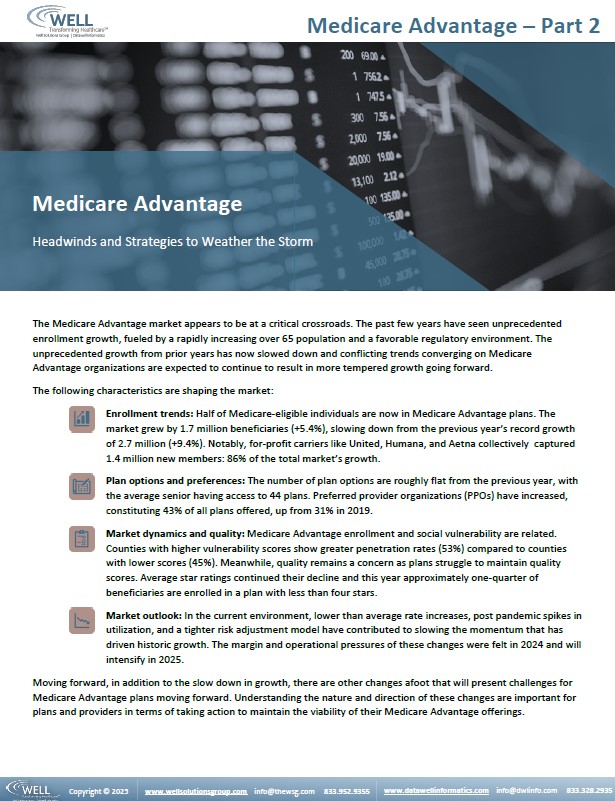
Medicare Advantage – Part 2
Headwinds and Strategies to Weather the Storm
The Medicare Advantage market appears to be at a critical crossroads. The past few years have seen unprecedented enrollment growth, fueled by a rapidly increasing over 65 population and a favorable regulatory environment. The unprecedented growth from prior years has now slowed down and conflicting trends converging on Medicare Advantage organizations are expected to continue to result in more tempered growth going forward.
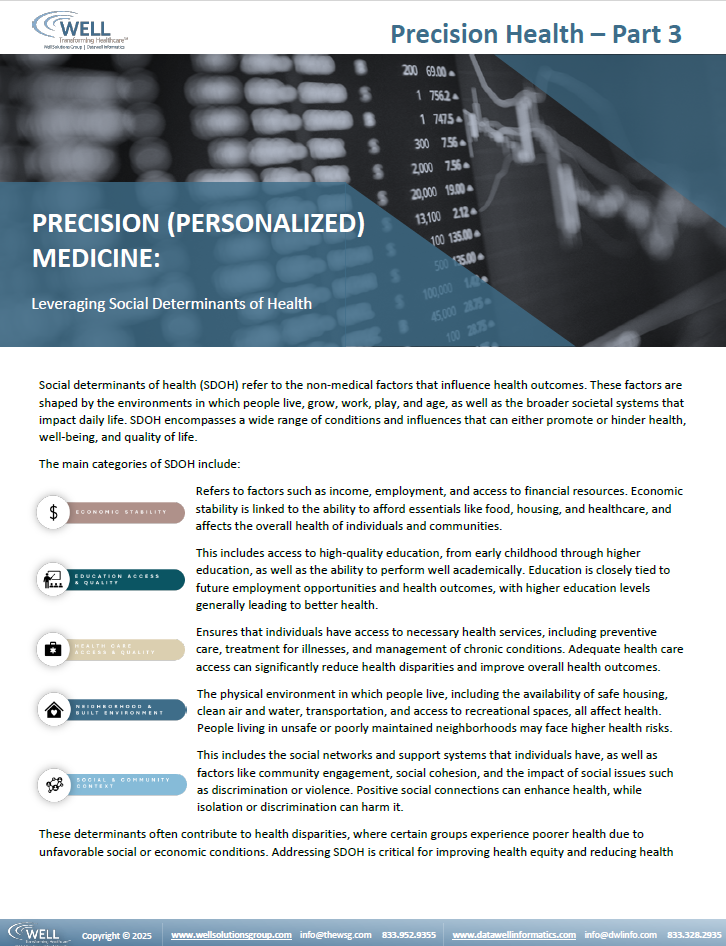
Precision Medicine – Part 3
Leveraging Social Determinants of Health
Social determinants of health (SDOH) refer to the non-medical factors that influence health outcomes. These factors are shaped by the environments in which people live, grow, work, play, and age, as well as the broader societal systems that impact daily life. SDOH encompasses a wide range of conditions and influences that can either promote or hinder health, well-being, and quality of life.
These determinants often contribute to health disparities, where certain groups experience poorer health due to unfavorable social or economic conditions. Addressing SDOH is critical for improving health equity and reducing health disparities across populations. Programs and policies aimed at improving SDOH, such as increasing access to education, healthcare, and economic resources are essential for fostering better health outcomes for all.

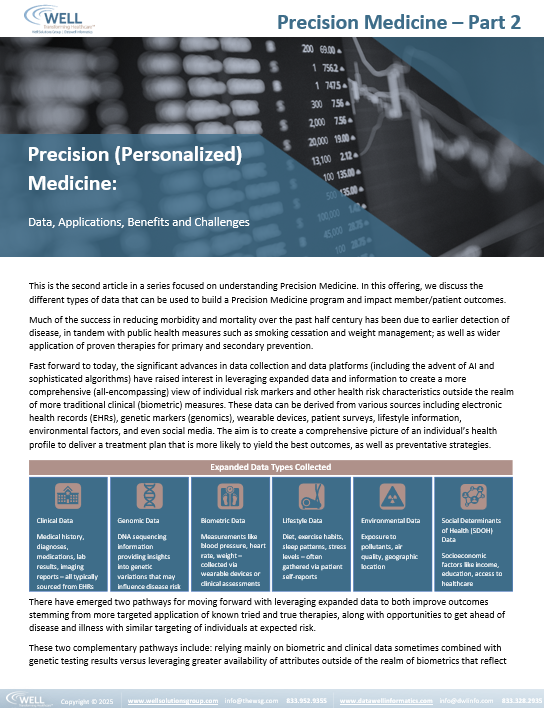
Precision Medicine – Part 2
Data, Applications, Benefits and Challenges:
Much of the success in reducing morbidity and mortality over the past half century has been due to earlier detection of disease, in tandem with public health measures such as smoking cessation and weight management; as well as wider application of proven therapies for primary and secondary prevention.
Fast forward to today, the significant advances in data collection and data platforms (including the advent of AI and sophisticated algorithms) have raised interest in leveraging expanded data and information to create a more comprehensive (all-encompassing) view of individual risk markers and other health risk characteristics outside the realm of more traditional clinical (biometric) measures.

Value-Based Care – Article 1 – December 2024
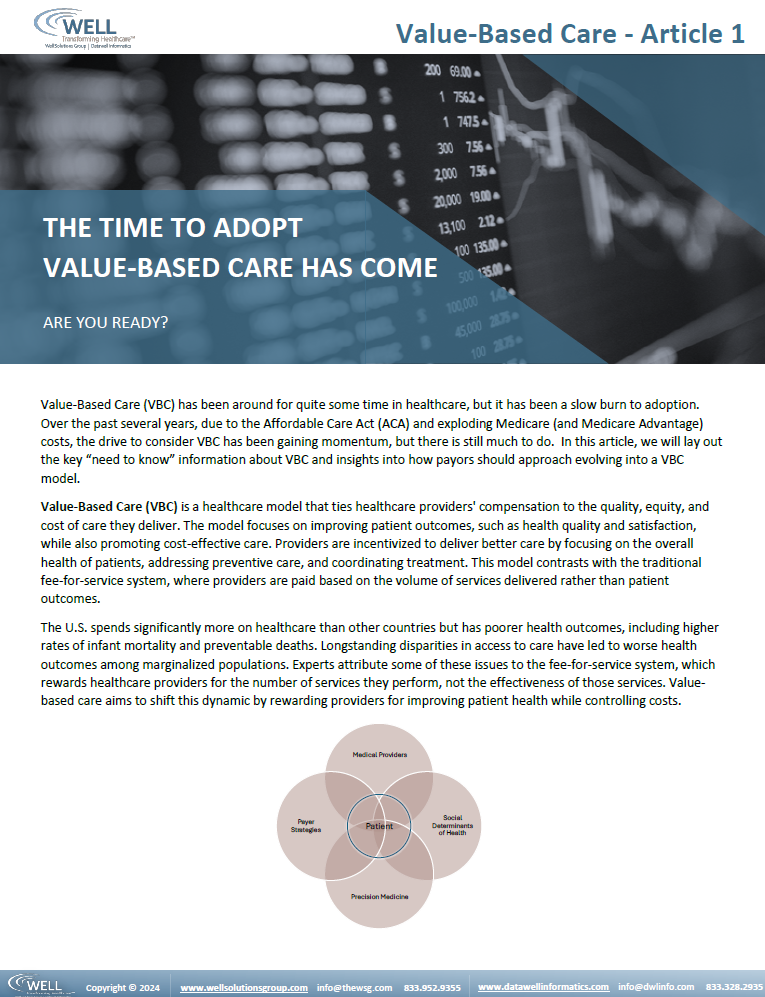
Value-Based Care (VBC) is a healthcare model that ties healthcare providers’ compensation to the quality, equity, and cost of care they deliver. The model focuses on improving patient outcomes, such as health quality and satisfaction, while also promoting cost-effective care. Providers are incentivized to deliver better care by focusing on the overall health of patients, addressing preventive care, and coordinating treatment. This model contrasts with the traditional fee-for-service system, where providers are paid based on the volume of services delivered rather than patient outcomes.

CMS Pre-Authorizations – November 2024
CMS Interoperability and Prior Authorization Final Rule Synopsis
The Centers for Medicare & Medicaid Services (CMS) changed its prior authorization rules to simplify and digitize the process, and to reduce the burden on each of the three legs in the healthcare delivery tripod: patients, providers, and payers. In particular, CMS aims to reduce administration, simplify and accelerate the process, and introduce standardization across payers.
It is critically important for providers and especially payers to get ahead of these changes by assessing processes and the technology necessary to support the rules change and ensure compliance.